Building a digital product is the visible part. The launch gets celebrated, the new app gets announced, the ribbon gets cut. What happens next —that the product keeps working, fast and available, on an ordinary Tuesday at three in the afternoon and at three in the morning— makes no headlines. And yet that's where almost all the value of what was built is decided.
Many companies call that “after” support, and treat it as something that shows up when something breaks. That's the mistake. Operating software in production isn't waiting for it to fail so you can fix it: it's an engineering discipline, with its own method, as demanding as building it. And once the software becomes critical to the business, the difference between operating it with discipline and operating it under pressure is paid in money, in customers, and in sleepless nights.
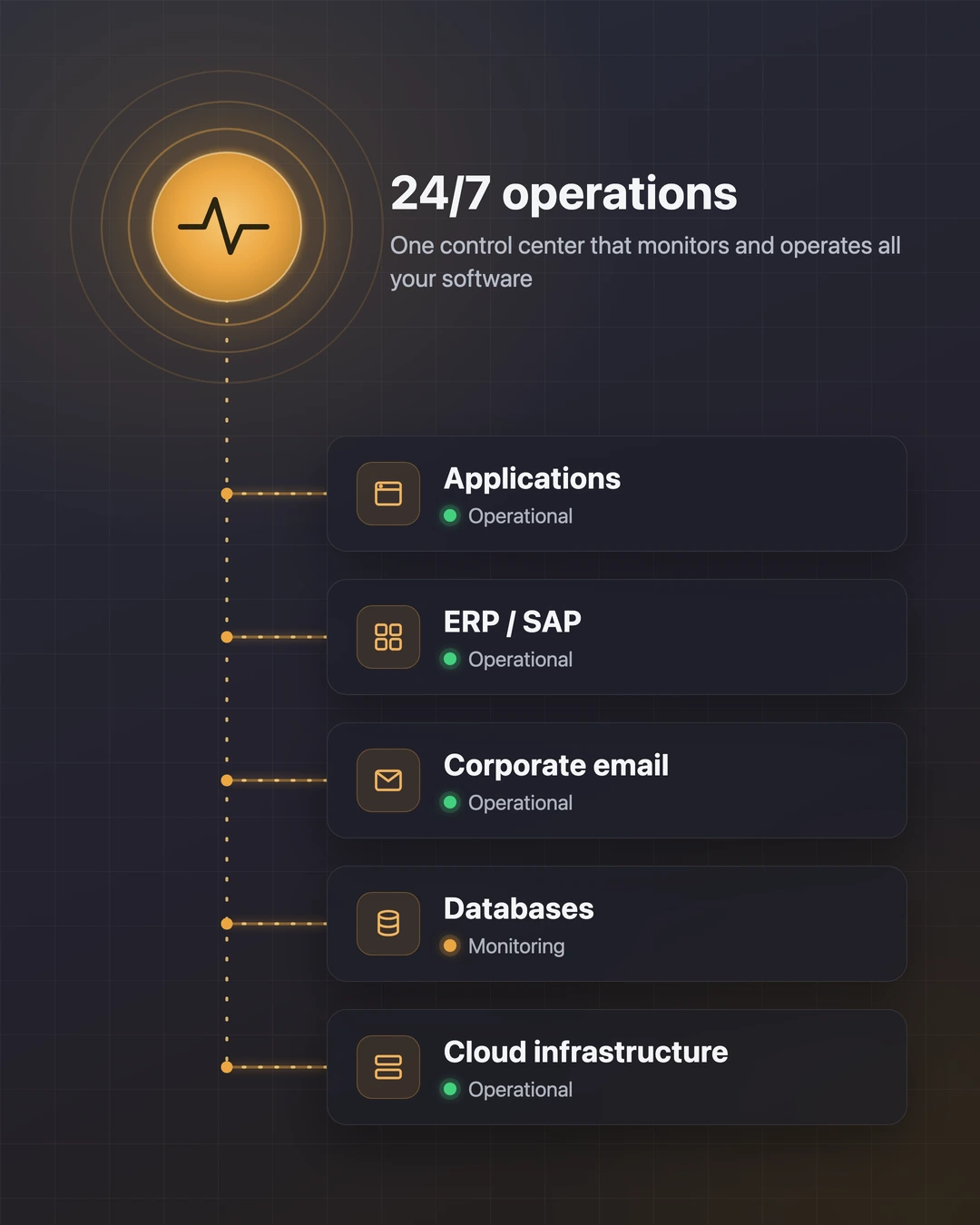
And we're not talking only about the app or the site your customers see. We're also talking about the internal software the company depends on every day: the ERP where operations live —a SAP, for instance—, corporate email, databases, the infrastructure that keeps it all up, on-premise or in the cloud. All of that has to be operated too, and with the same discipline.
This is the discipline we operate with, and why it makes sense to delegate it to someone who practices it as a craft.
We start by understanding, not touching
When we take over a system —often one we didn't build— the first temptation is to jump in and fix what looks wrong. We don't. Before committing to any service level, we get to understand it: how it's built, what risks it carries, what technical debt it hides, what it depends on to stay up.
That step seems slow and it's the opposite. Touching a system you don't understand is the fastest way to break it. Understanding it first is what lets us operate it without surprises, and lets the company know what it's getting into before it's too late. That's how we can take over a product that already exists, no matter who built it, without inheriting a time bomb.
We prevent before we react
An operation without method is measured by how fast it responds when something goes down. An operation with method is measured by how many times nothing went down.
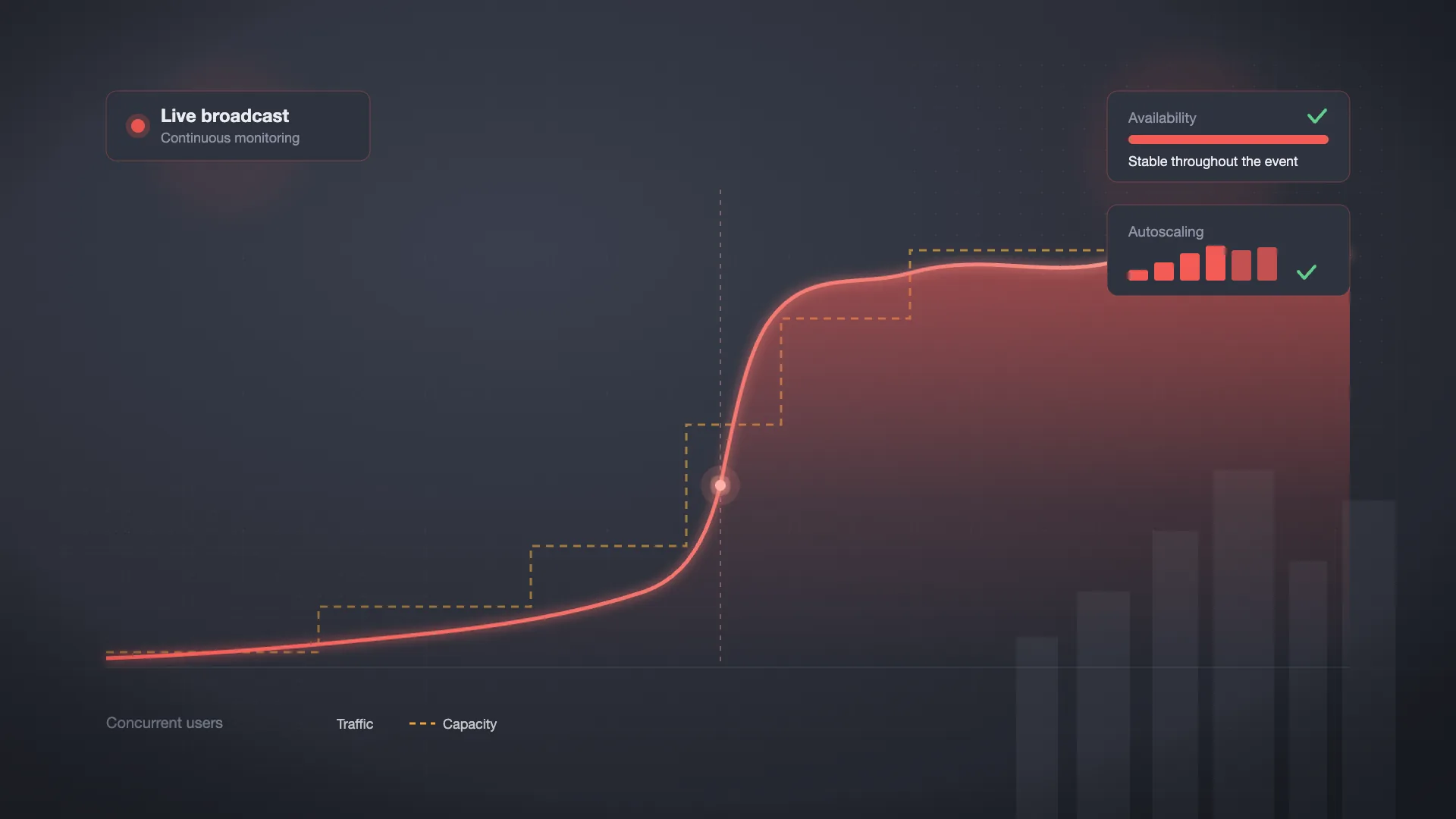
Most of the work happens before the incident, not during it. We monitor proactively to catch the problem before the user notices, we watch the signals that anticipate a failure, and we act while they're still cheap to fix. The best day of operations is the one where nothing happened, and nothing happened because someone made sure of it. That work is invisible by design, and it's the one that delivers the most value.
Operating well is also operating cheaply
There's a cost to operating badly that shows up on no invoice until it explodes: the hours of expensive people fighting fires, the customer who leaves without a word because the app was slow, the cloud bill that grows month after month with no one watching it.
That's why, for us, controlling cost is part of operating, not a separate service. We apply FinOps discipline to the infrastructure we operate: we right-size what's needed, shut down what isn't, and turn a bill that only went up into one that goes down. Operating your technology and lowering your cloud cost aren't two separate conversations; they're the same one.
We sustain the service with method, not heroes
The difference between “we help you when we can” and “we always respond” isn't how much willpower the team puts in. It's method.
A committed service level isn't held up by one person who stays late and saves the day. It's held up by processes, monitoring, defined on-call rotations, and a reliability discipline that doesn't depend on the one who knows being around today. Building the machine that always responds is a big part of what we do.
This can be delegated
Here's the point: none of this requires the company to build an operations team from scratch. Building the internal capability to operate with discipline —the monitoring, the on-call, the method, the people with judgment— takes years and is expensive to sustain. The alternative is to delegate it to someone who already has it in place and practices it as a craft.
That's exactly what we do. We take what's already in production —what your customers see or the software your team works with—, whether we built it or not, stabilize it, operate it with service levels, and grow it. The internal team focuses on what makes the business different; we take care of making the technology that supports it work.
Any system in production is a living asset: it degrades if no one cares for it and runs better if someone operates it with judgment. Operations isn't the epilogue of the project, it's its life. If you have software in production and today you're not clear on who responds when something fails, maybe you don't need to build anything new. Maybe you need someone to operate it well. That's something we can do with you.